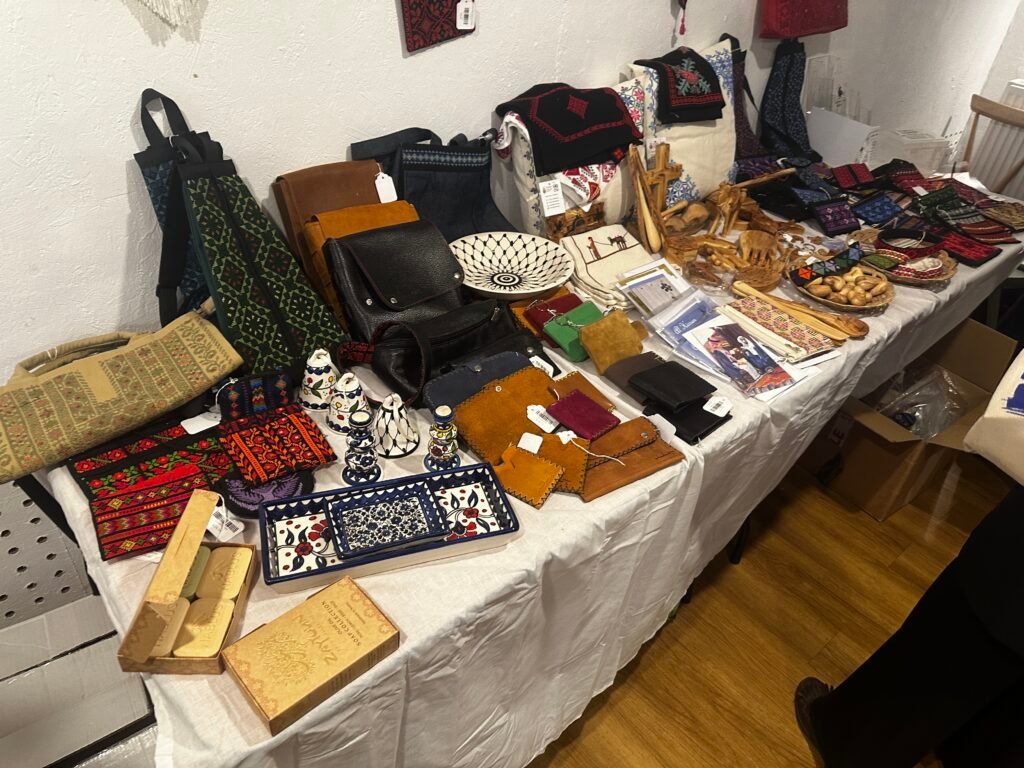
Our Future Shop
Bringing Palestinian Craftsmanship to Glasgow
Our shop will be a space to purchase beautiful handmade goods while directly contributing to the economic stability and future prosperity of Palestine.
Some of the Palestinian craft suppliers are featured below –
Our supplier: Hadeel
 We are proud to work with Hadeel, the Edinburgh -based shop that helps Palestinian artisans and marginalised communities become economically independent through Fair Trade. Hadeel empowers these communities not only through sustainable income but by supporting their culture and traditions.
Goods are imported directly from artisans and organisations, ensuring that every purchase you make has a direct positive impact on those who need it most. You can purchase items from Hadeel online
Featured Artisans
Hebron Ceramics & Glass
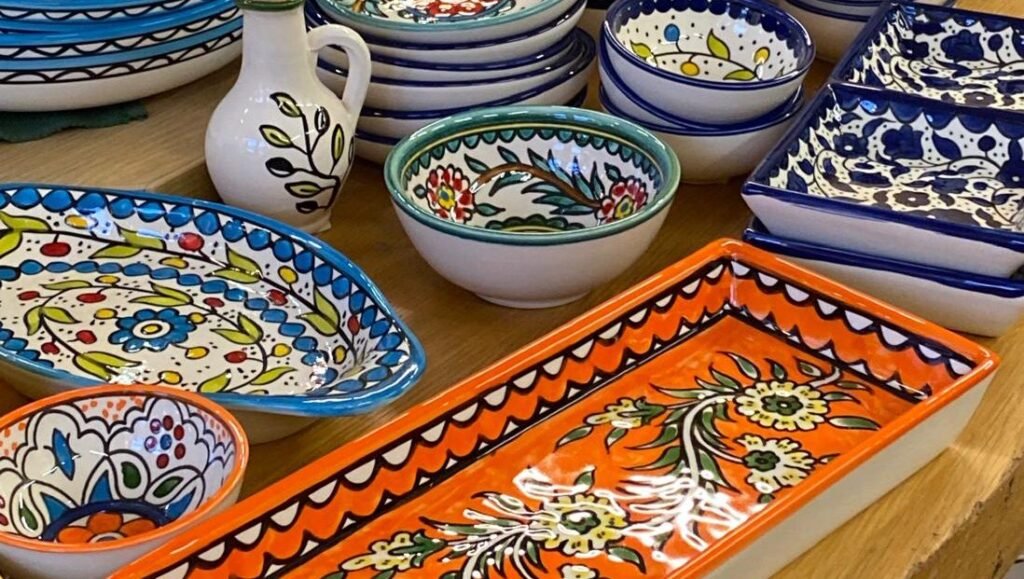
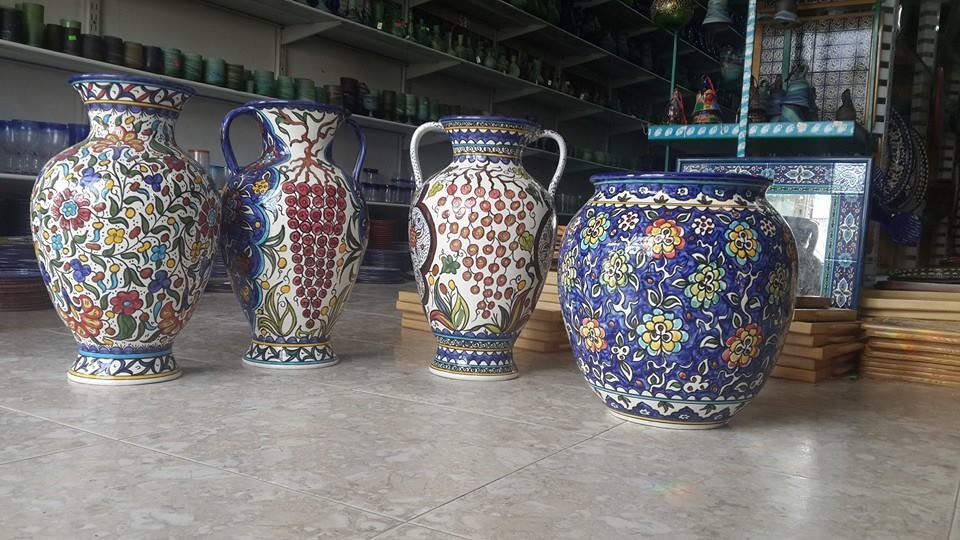
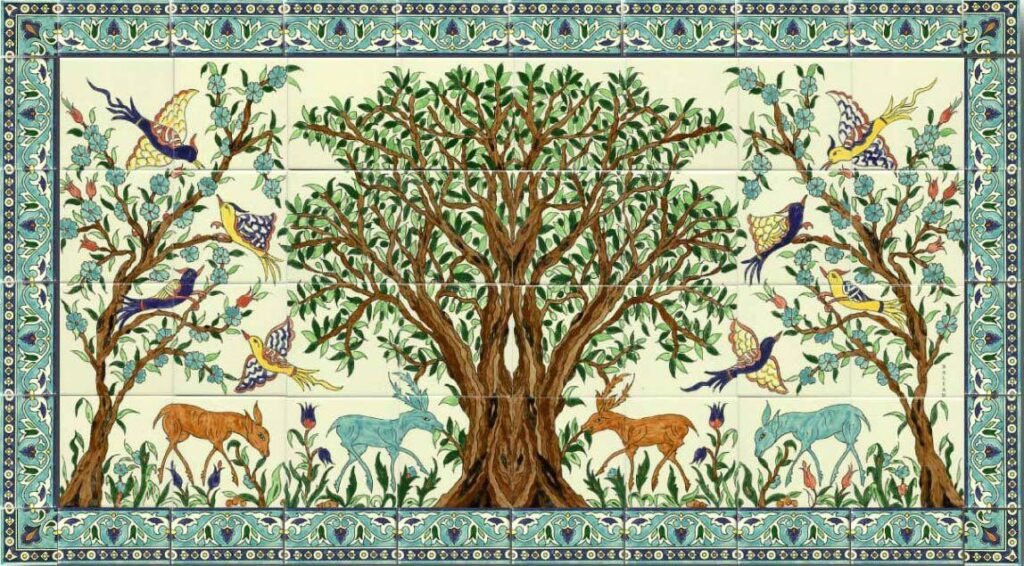
Those who were there will know how many beautiful ceramic items were bought at the Christmas Market in December 2025. We had to restock twice to meet demand. Supplied to us by Hadeel, Edinburgh, all the pottery is made by Hebron Ceramic and Glass.
The Company was founded in 1890 but glass and ceramic production in Hebron and the region began back in Phoenician and Roman times. Owned by the Natsheh family who have been making hand-blown glass for generations, Hebron Glass opened a ceramics factory in 1962, which temporarily closed after the first intifada and then re-opened in 2015. All the ceramics we sold were produced by the Company, who represent a collective of artisans making traditional Palestinian ceramics.
Hamzeh Natsheh tells us that “While daily life here presents unique and ongoing challenges, our unwavering focus remains on supporting our talented artists and their families. Through this craft, they are able to sustain their livelihoods and keep our cultural heritage alive.”
Hebron is one of the West Bank’s leading economic centres, with over 6,000 years of craftsmaking in glass, ceramics and embroidery. The City, often in the media spotlight for the tensions caused by the occupation, gained another kind of recognition in 2016 when it was presented with the World Craft City Award.
Hamzeh says that, as a business, “we choose to remain strictly focused on the artistry and craftsmanship of our work. We do not align ourselves with any political parties or viewpoints. While we, like everyone else, feel the weight of the current situation and deeply hope for a lasting peace that allows life to return to normal, we find that focusing on our passion for glass and ceramics is the best way to contribute positively.”
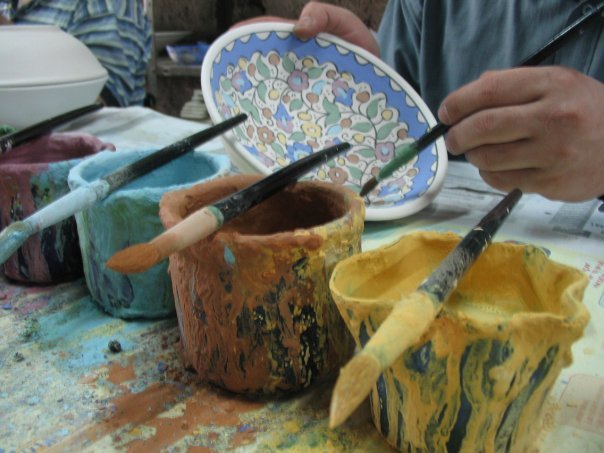
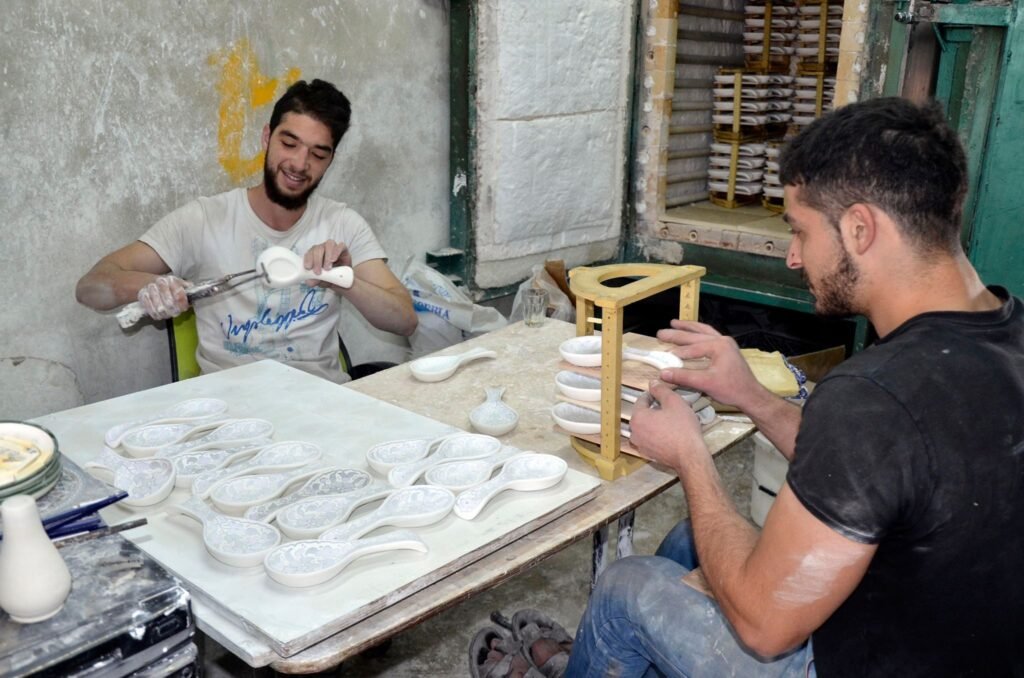
The making of ceramics goes through several phases: the first one, called the ‘cookies phase’ consists of making mud – clay baked at a temperature of a thousand degrees. The second stage is drawing patterns and colouring, and then a third phase, glass or silicate application.
Each single piece takes almost a week. First the clay is put on a pottery wheel and shaped by hand. The following day, the edges are smoothed by hand using water and a sponge. Then the piece is fired in a kiln at 1500º for two days. Black outlines are then made on each piece and the designs filled with colours. Layers of glaze are then applied before firing for 24 hours.
In an interview with Middle East Eye in 2017, Hamzeh said that “Selling ceramics via craft shops across the world has become crucial to keep the factory open. Hamzeh says that this has become increasingly difficult to organise. ‘We used to easily transfer products to Haifa Port before 2000 and the Second Palestinian Intifada’. Since then, merchandise has to get through several checkpoints causing delays and increasing expenses.”
It’s important for Palestinians not to feel isolated. We depend on our partners in the USA, Canada and Europe who are doing a great job telling our story.” Switching to exports has saved the business but local Palestinians are important too: “they use it for serving food and drinks in their homes – It’s a way for them to be proud of their Palestinian culture.”
Hamzeh is grateful to people in Scotland for buying their ceramics, from PalCafe in Glasgow and from Hadeel in Edinburgh and online, “We are thrilled to hear they were well-received at your Christmas Market and thank you all for the wonderful work you are doing to showcase our ceramics and glass products in Scotland. Please keep us in your thoughts for peace, as this region desperately needs it.”
Read the article on Hebron Ceramic and Glass in full : Middle East Eye
YouTube video of visit to the Factory. Ceramics available to buy online from Hadeel
Hirbawi Textile Factory
One of only two surviving Palestinian Kufiya (keffiyeh) factories in Palestine, Hirbawi is a family-run business in Hebron that has been making iconic, 100% cotton scarves on traditional looms for generations.
By purchasing one of their handwoven keffiyehs, you are supporting a piece of Palestinian history, as well as providing dignified work to the people behind these beautiful textiles.
Bethlehem Arab Women’s Union
When women are empowered, families and societies rise
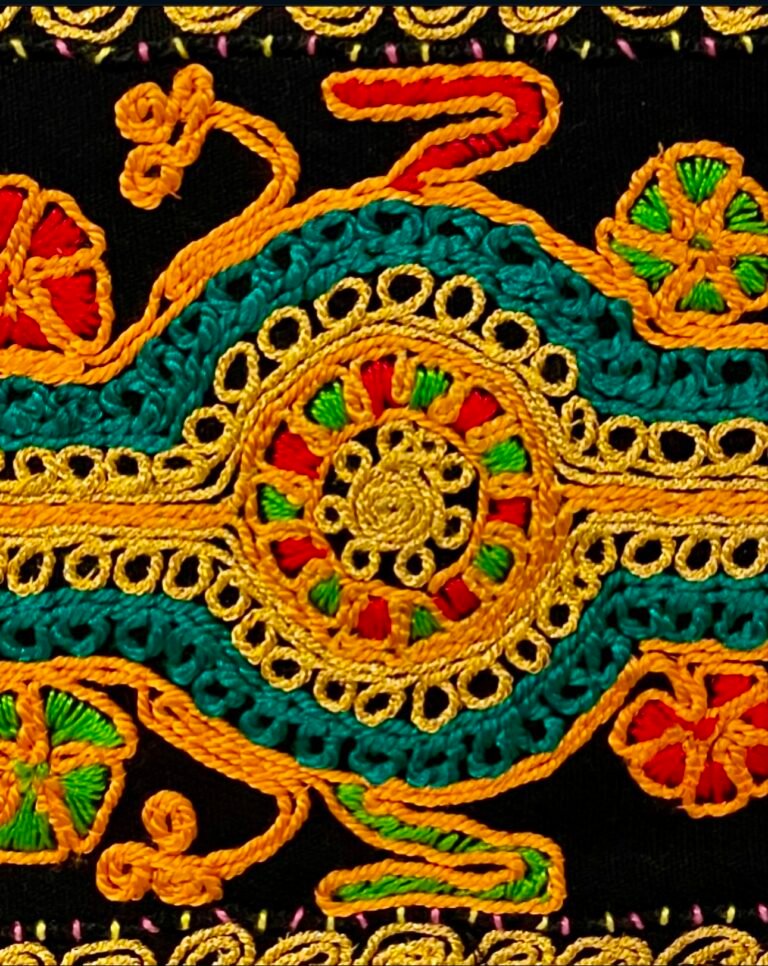
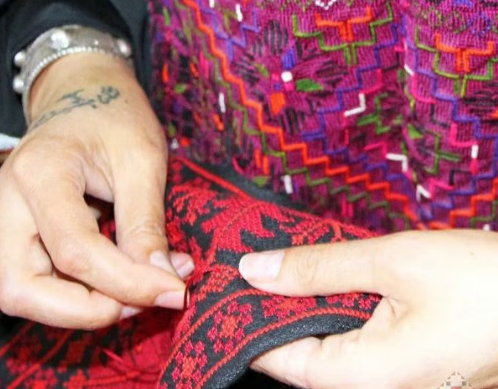
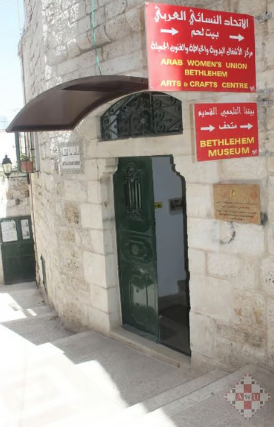
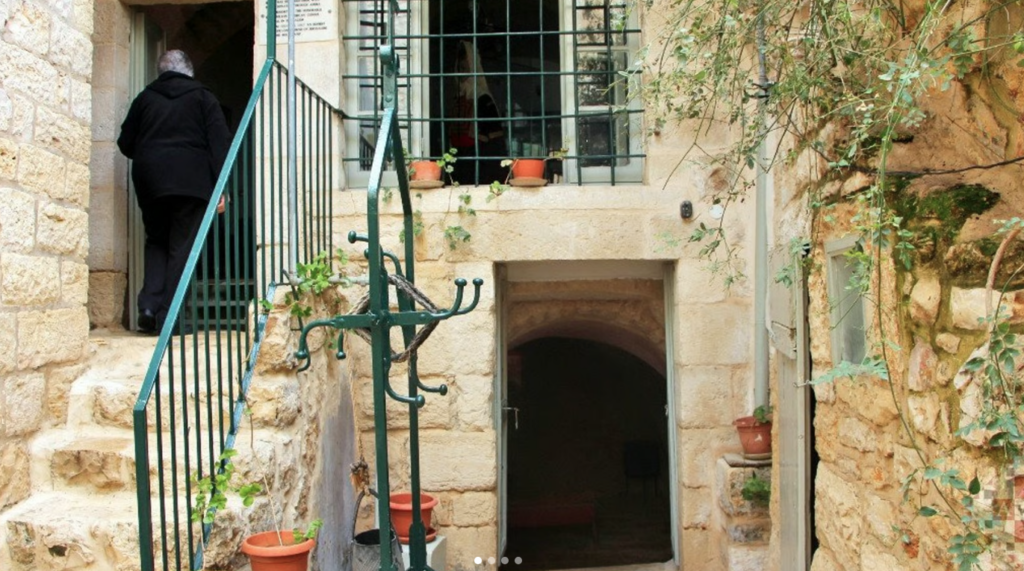
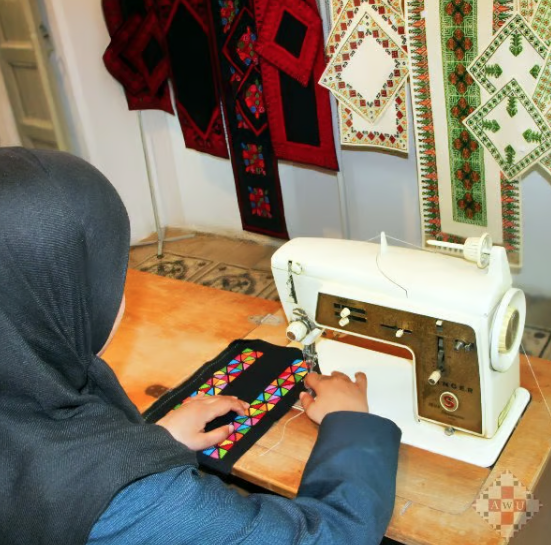
The Bethlehem Arab Women’s Union is a non-profit charitable, social and cultural society, founded in 1947 in Bethlehem. Its first mission was to cope with medical emergencies during the invasion of 1947. It now promotes Palestinian food, arts and crafts, supportingPalestinian women by providing work. The Union aims to promote and support local handicrafts, Palestinian folklore and culinary tradition. It leads numerous activities and cultural centres and manages an Embroidery Centre, started in 1968 to preserve traditional cross stitch embroidery skills, an integral part of Bethlehem culture and heritage. The Union also maintains a Folklore Museum.
Women are trained at the Centre and receive the raw materials – threads and canvas – to work at home. This enables them to balance work alongside care of their families and homes.
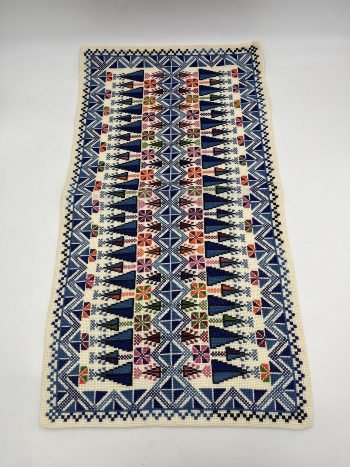
Most of the beautiful runners and mats imported by HADEEL in Edinburgh are made by 100 women working at home, bringing the work to be washed and finished at the Union.
Lack of tourism has resulted in a severe drop in sales and marketing is severely limited as travel permits to Jerusalem are rarely given. Their charitable work is very diminished through lack of donations; however, like other Palestinians, the women involved prefer work to charity: “When you give work to people you give them life and courage and produce peace.”
Palcrafts, which runs PalCafe’s retail supplier HADEELprovided a grant to the Union in 2006, which was used to purchase a fax machine, sewing machine and product labels. In 2016 a further grant updated its resources with a computer and professional printer.
Altogether, 150 women from villages and refugee camps around Bethlehem benefit from being part of the Bethlehem Arab Women’s Union.
Cross-stitch embroidery in Palestine
Once a traditional craft practiced by village women, Palestinian cross-stitch embroidery has become an important symbol of Palestinian culture. Embroidered pieces can be found in the homes of most Palestinian families in the West Bank, Gaza Strip, Israel and the Diaspora beyond, adorning the walls of houses in Jerusalem, villas in the Gulf, suburban homes in the United States, and cement block houses in refugee camps. In addition, cross-stitch embroidery is given as gifts and worn by Palestinians worldwide on festive occasions.
The popularity of embroidery springs from both its beauty and its association with the Palestine of the past. Common patterns reflect the millennia-long history of the land. The designs are derived from sources as diverse as ancient mythology and foreign occupations and date as far back as the Canaanites, who lived in the area over three thousand years ago.
The handicraft also symbolises the traditional rural lifestyle of Palestine, much of which was lost after the 1948 creation of the state of Israel. Embroidery was the principal decoration of rural women’s clothing. It was part of a village women’s daily routine and a means of showing off her personal skills and social identity. The patterns, colours and quality of the dress reflected a woman’s social standing, marital status and wealth.
Although the Palestinian cultural landscape has changed dramatically in the last fifty years, cross-stitch embroidery has remained a vibrant handicraft because, for many Palestinians, it is a familiar reminder of Palestine in the days of their grandparents or great-grandparents.
Empowering Women, Strengthening Communities
The Bethlehem Arab Women’s Union’s mission extends far beyond embroidery. It is dedicated to empowering women and strengthening community life through:
- Vocational training and skill development
- Cultural preservation and exhibitions
- Social and humanitarian services for those in need
- Palestinian cuisine promotion through community kitchens
- Cultural museums and heritage programmes
Find out more about the work of the Bethlehem Arab Women’s Union and how you can support it with donations HERE / Instagram / Facebook
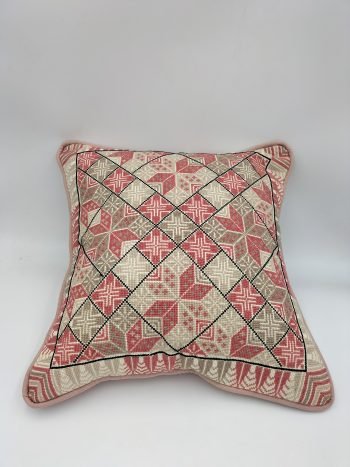
And support the Union by buying it’s embroidery from HADEEL HERE including scarves, shawls, cushion covers and runners.